Resolve
Supporting men's mental health
A personalised mental health tracker designed for young men
ROLE
UX/UI Designer
Timeline
Sept - Nov 2024

Overview
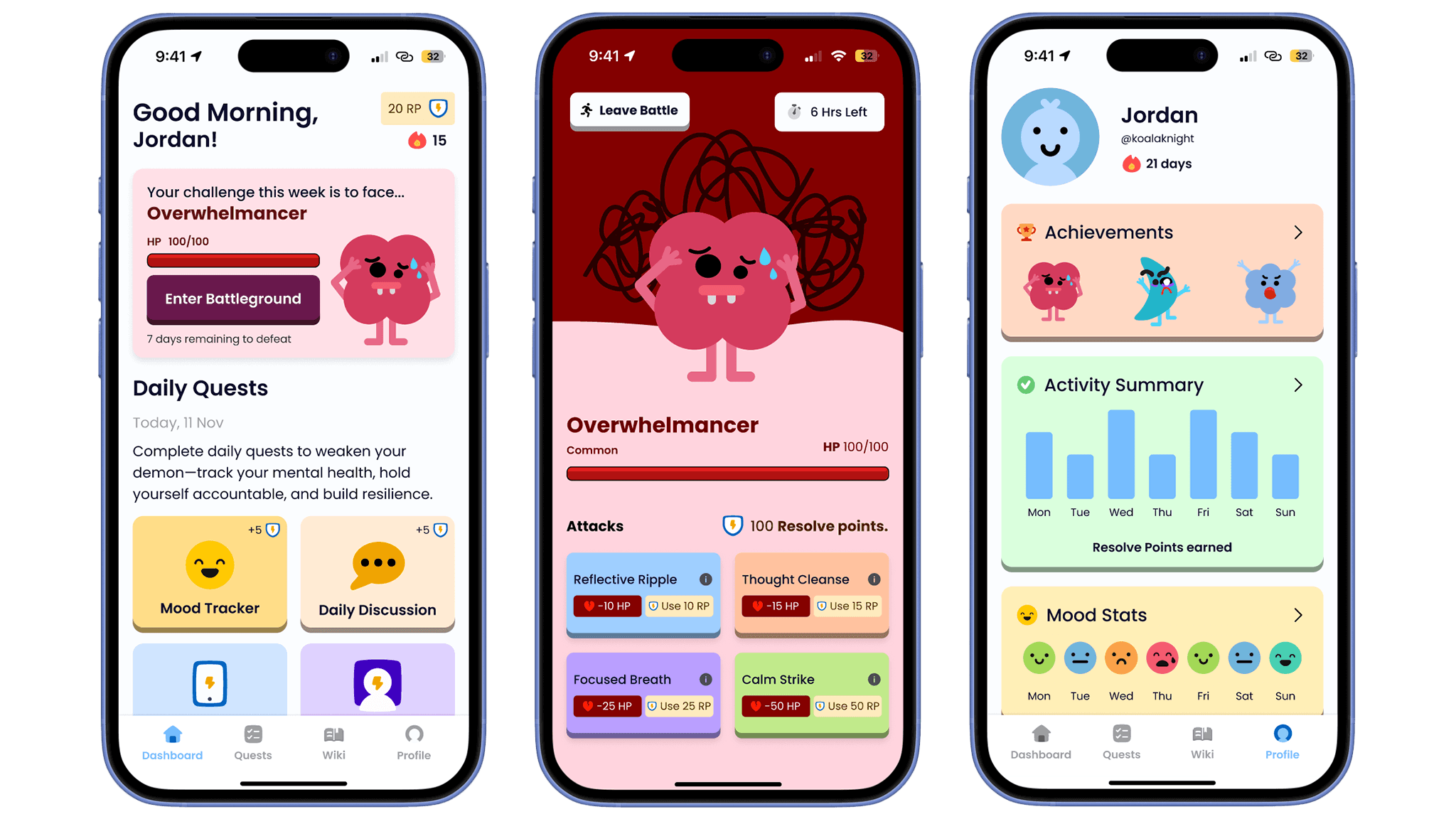
Resolve is a gamified mental health tracker that is designed to help young men prioritise their mental well-being. It features mood tracking, personalised tasks, and a safe space for users to share their feelings and connect with a supportive community. Each week, users battle their "demons" to track their progress in a tangible way while engaging with tailored resources and interactive rewards, making mental health more accessible and empowering.
This is a project for Prodigi’s Product Innovation Program, a 9-week program for students to collaborate in multidisciplinary teams and gain hands-on experience in product design. I worked in a team of six that included students from diverse backgrounds — we were able to leverage each team member's expertise to create a well-rounded design concept. Our solution was recognised as the Best Creative Product during the final product showcase.
The Brief
To design a digital healthcare solution that supports patient self-care and delivering transparency, in a time where Australia’s health system is in a time of change and opportunity towards digitisation, empowering users to take control of their own healthcare. Our team decided to focus on men’s mental health as our problem area.
The Problem
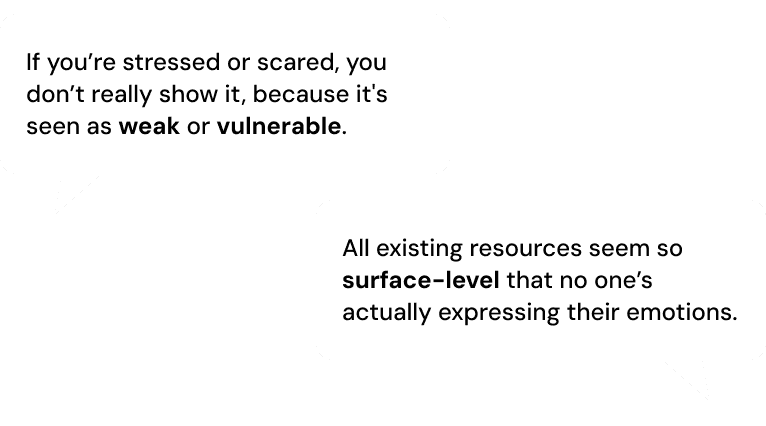
Distorted perceptions of strength
Stigma and lack of support
Risks of emotional isolation
Why men's mental health?
70%
of men experiencing mental health challenges do not seek professional support.
(Australian Bureau of Statistics, 2022)
1 in 5
males report experiencing loneliness with a steady rise since 2012.
(Movember, 2024)
75%
of suicides in Australia in 2023 were men
(AIHW, 2023)
Research
We wanted to delve deeper into the following research goals to understand men’s mental health in terms of:
Gender norms and societal expectations
Impacts on relationships with others
Existing resources and services
Effectiveness of managing their mental health
Barriers and challenges
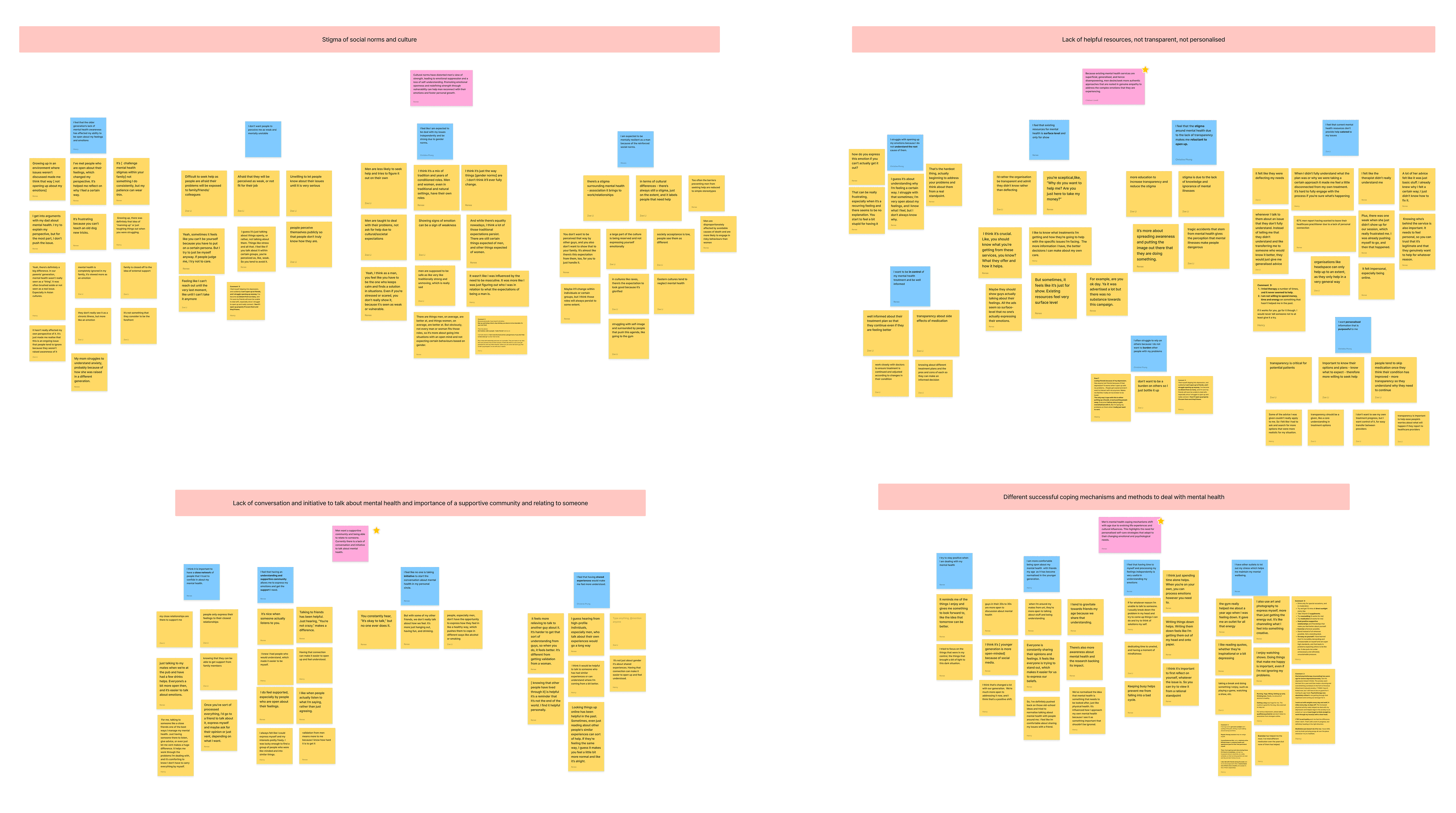
From user interviews, surveys, and online ethnography, we synthesised our results in the above affinity diagram. The key insights we found were:
Social and cultural norms have distorted men's view of strength, leading to emotional suppression and a loss of self-understanding.
Existing mental health services are superficial, generalised, and hence disempowering. Men desire more authentic approaches rooted in genuine empathy to address complex emotions.
Men want a supportive community and being able to relate to someone. Currently there is a lack of conversation and initiative to talk about mental health.
Problem Statement
Cultural and societal norms have distorted young men’s perception to equate strength with emotional suppression.
The stigma around mental health creates a lack of supportive communities and superficial resources, which disempowers men from pursuing self-care.
If unaddressed, men may continue struggling with emotional isolation and loneliness, leading to heightened risks of depression, anxiety, suicidal ideation due to disconnection with themselves and others.
User Persona & Journey
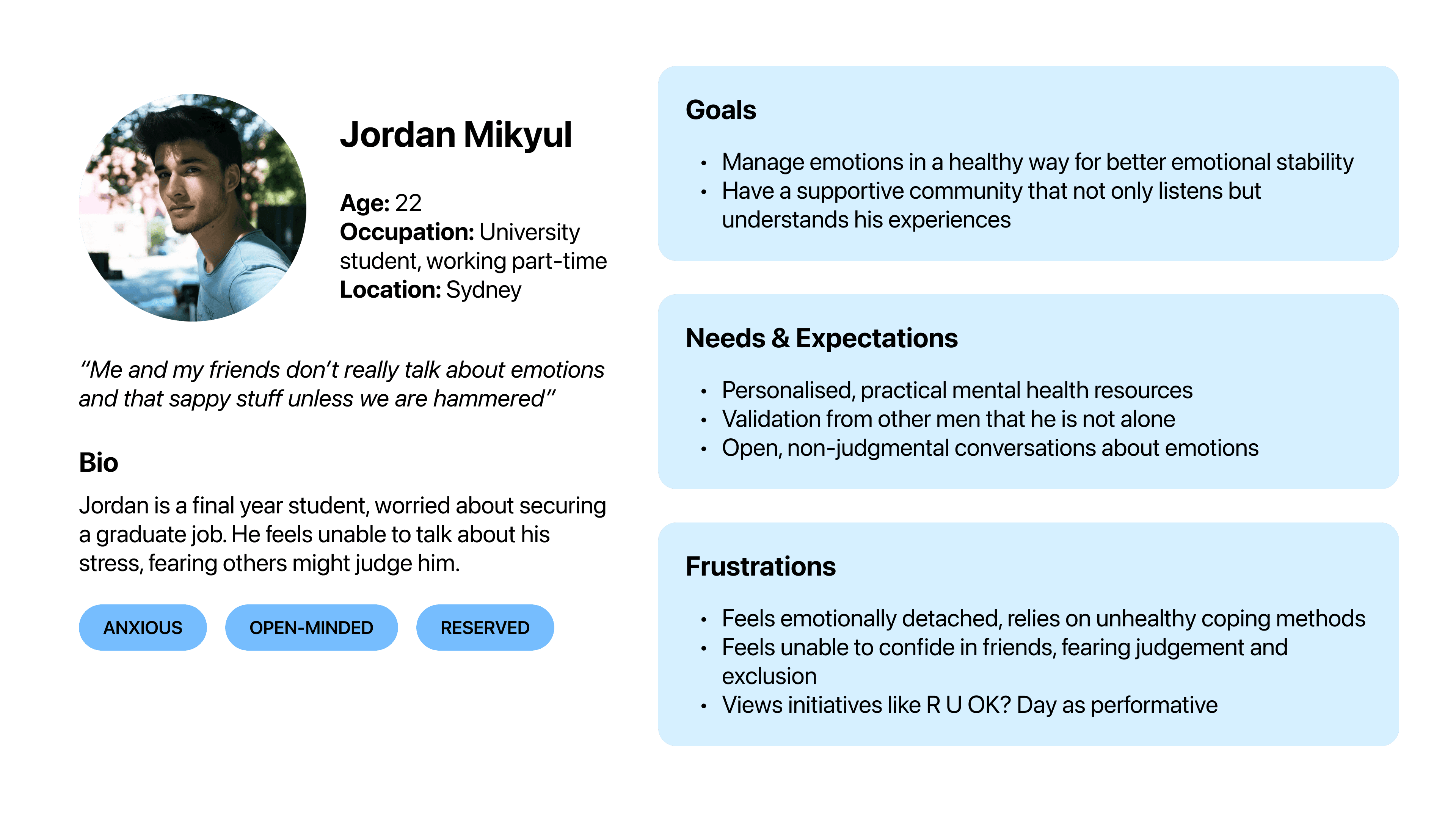
Based on our research, we created a user persona and journey to better understand user needs and behaviours, to guide our design decisions.
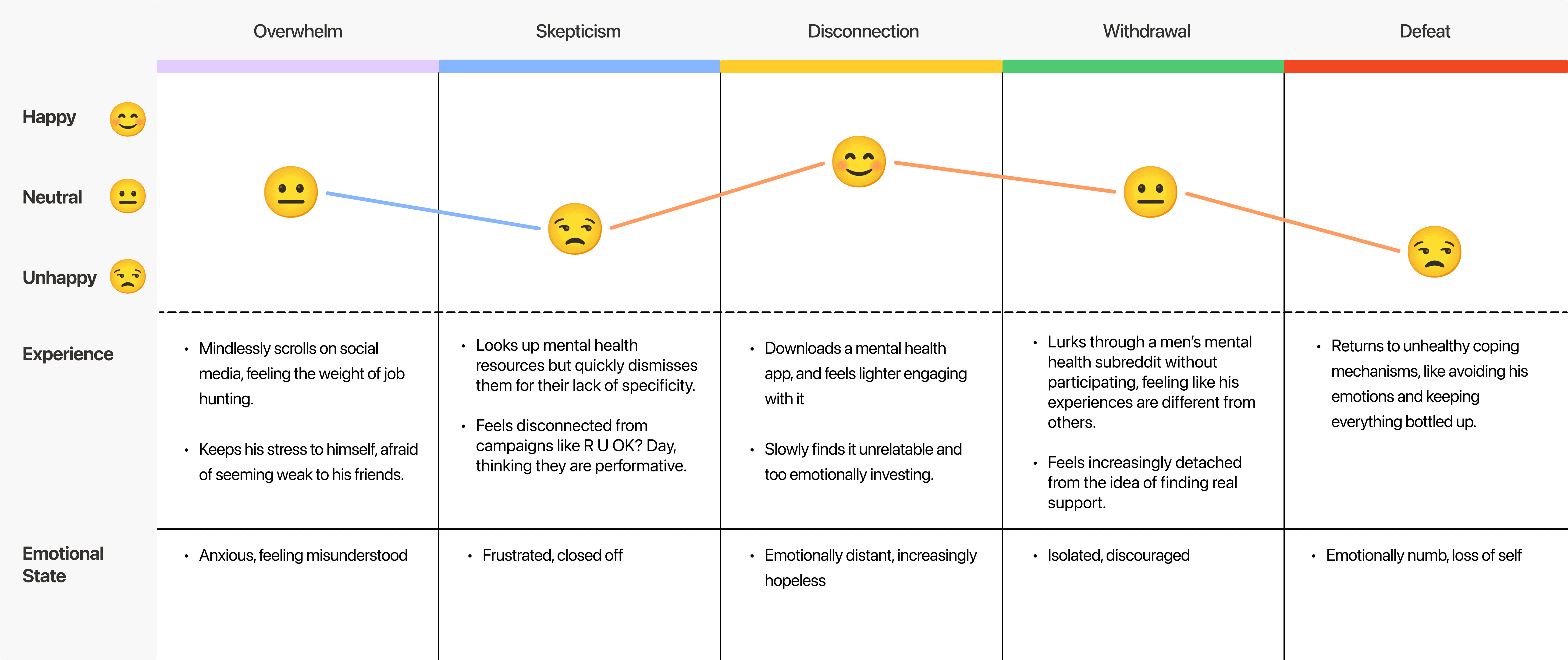
How might we empower men to combat loneliness and shift their perceptions of emotional vulnerability that encourages them to prioritise their mental well-being?
Ideation
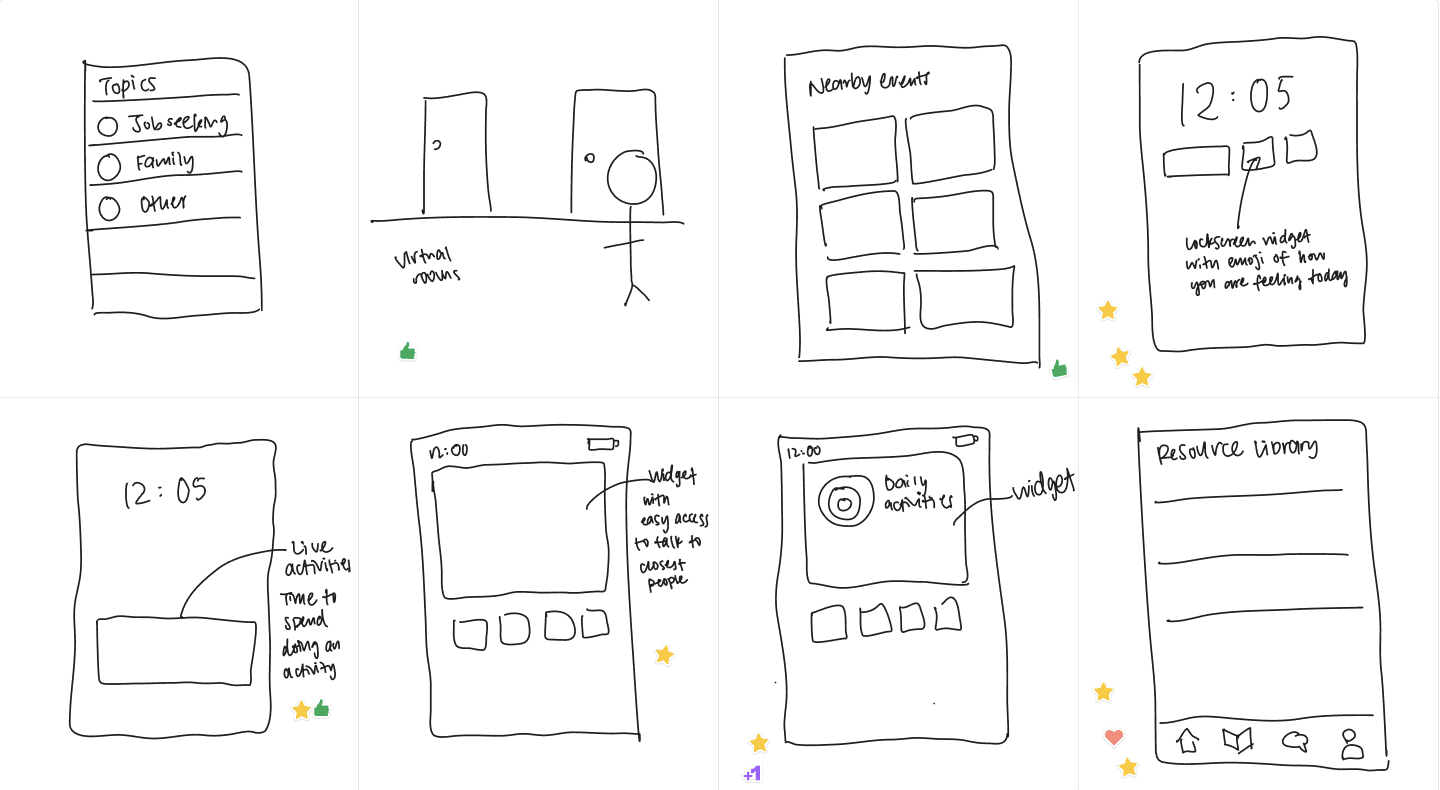
We used the crazy 8s method to quickly generate initial ideas to explore different design directions.
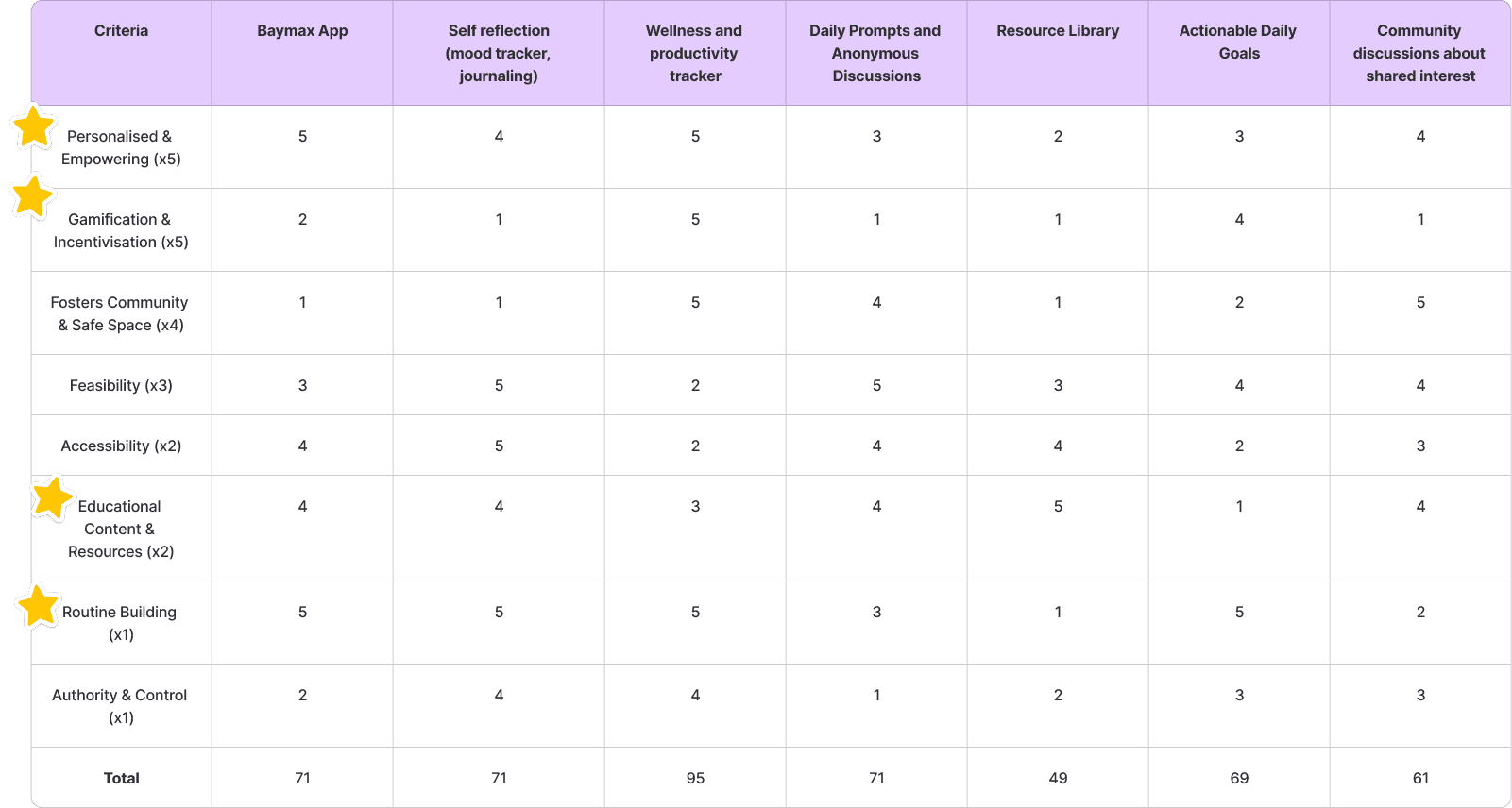
To narrow down our best ideas, we used a decision matrix to evaluate each idea against a set of criteria that we want our app to include. We wanted to create an engaging app catered specifically to young men, incorporating gamification to motivate and encourage users to actively manage their mental health.
Our chosen solution incorporated the best features from various ideas. The app centres around users battling their "demons" at the end of each week. Users complete a series of daily tasks over the week to manage their mental health and gain points, making self-care engaging and rewarding.
Competitor Analysis
As our solution is a gamified mental health tracker, we looked at other similar apps in the market to identify existing gaps. We also looked at adjacent apps that use gamification to evaluate features we could apply to our own project.
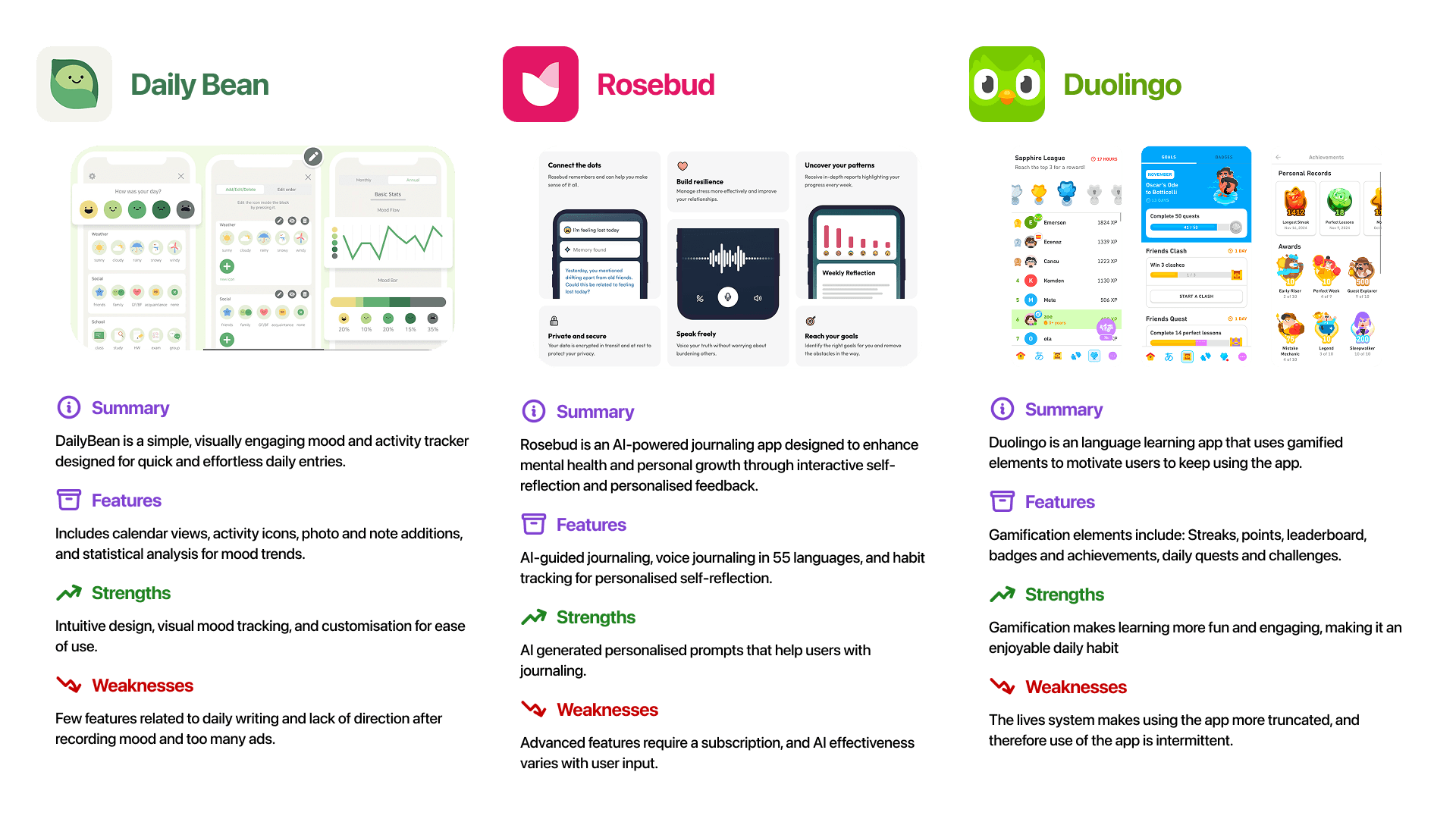
Gaps in the Market
Lack of male focused resources
Most mental health platforms are not tailored to young men’s unique challenges, missing relatable content, male-focused guidance.
Stigma and help-seeking barriers
Current solutions lack initiatives to normalise emotional openness for young men.
Limited engagement strategies
Many platforms fail to incorporate gamified or interactive features, which could better engage young men who might shy away from traditional mental health tools.
Site Map
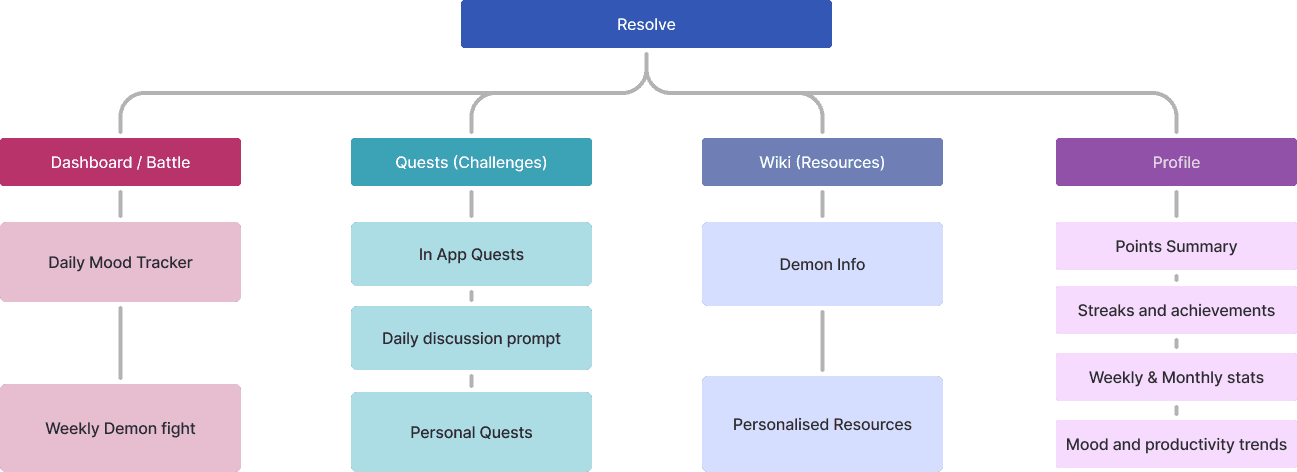
To plan the various features of our app, we created a site map to visually outline all the pages and content, and helped us better plan how we want our app to work.
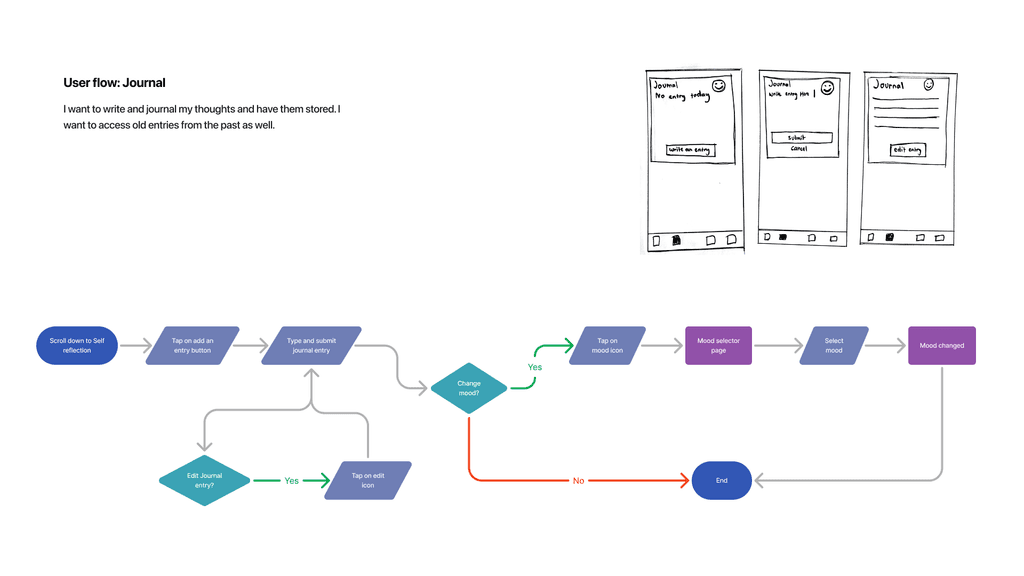
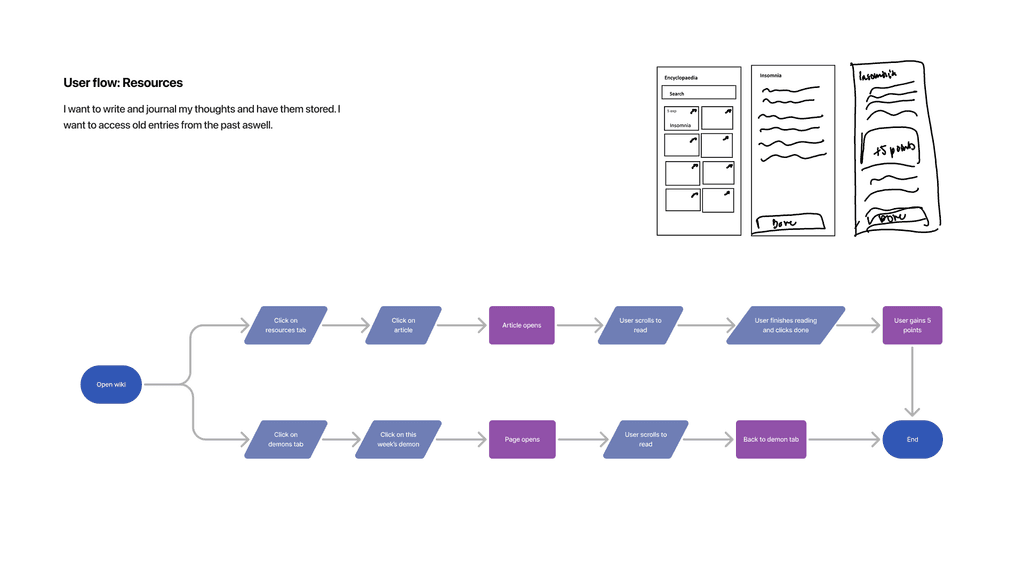
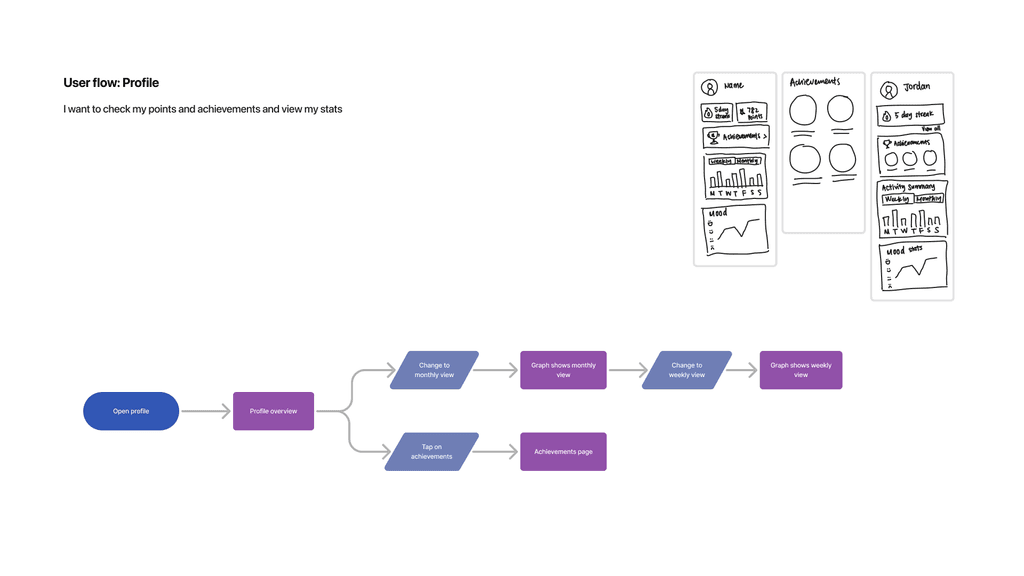
User Flows
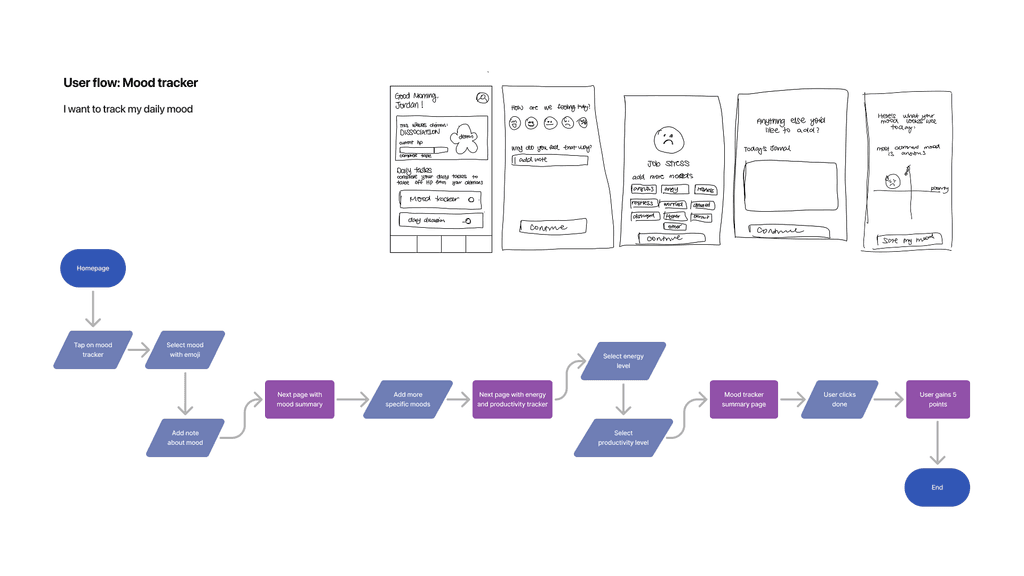
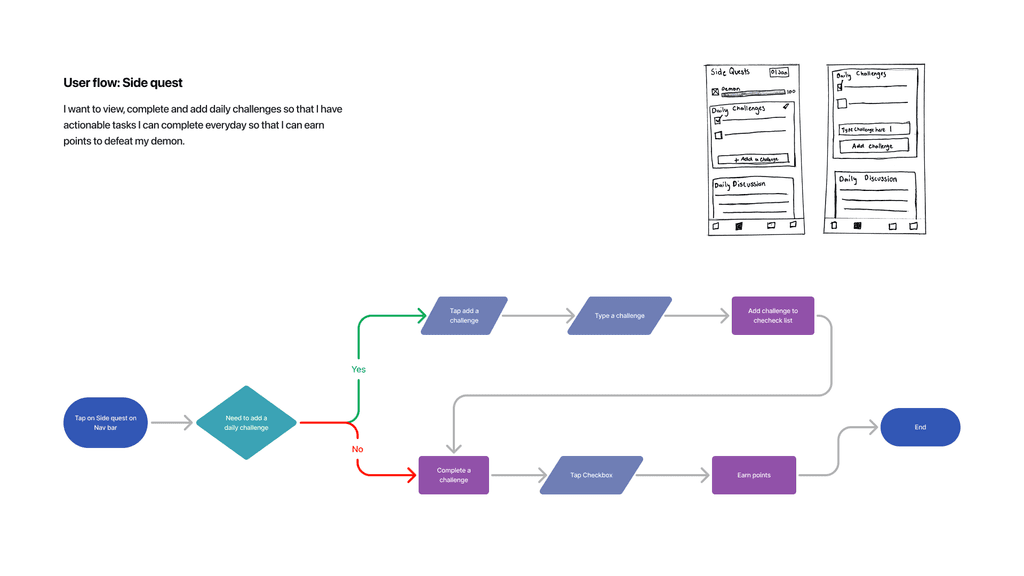
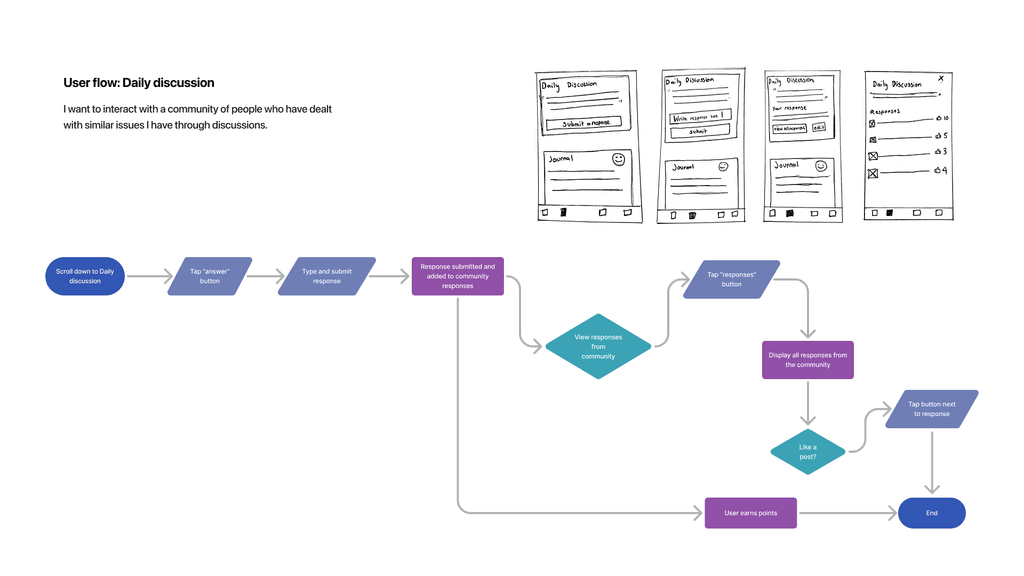
Our user flow diagrams outlined the tasks that users would perform to reach a goal. This helped us transform our ideas into sketches and wireframes.
Prototyping
Low-Fidelity Wireframes
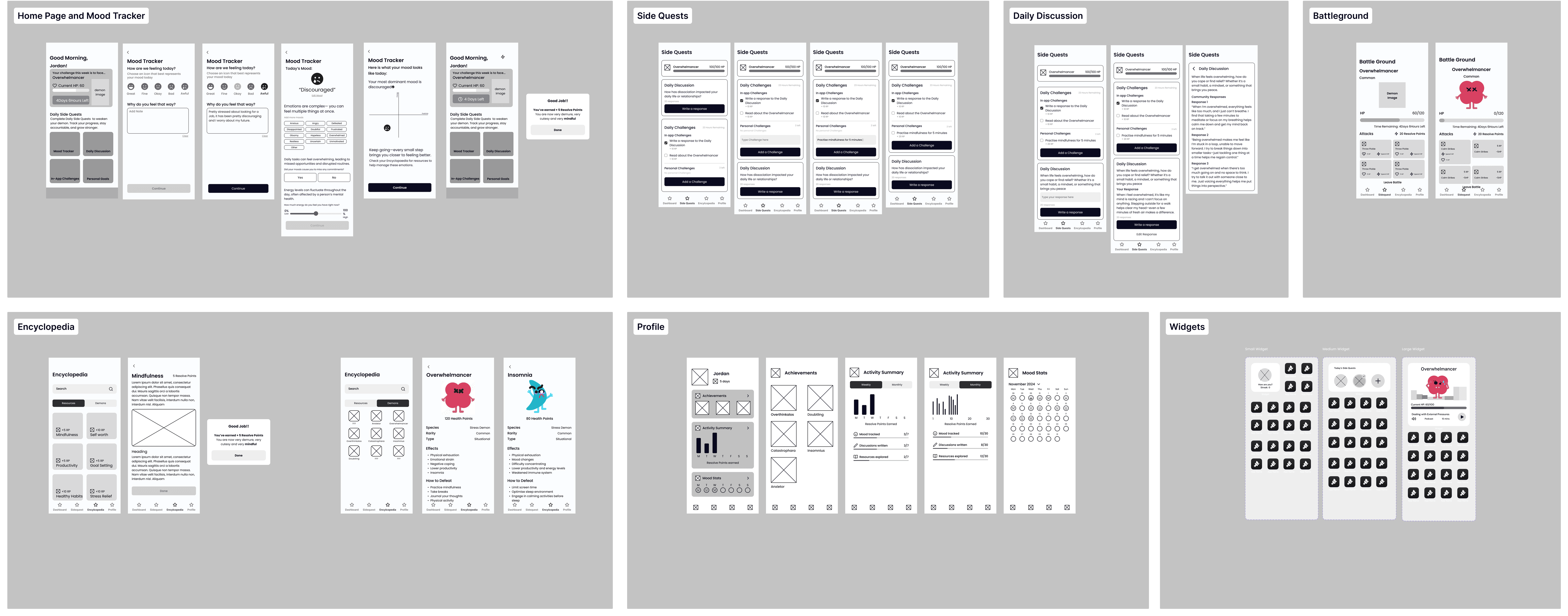
We transformed our sketches into wireframes, to visualise the basic layout and functions of our app, allowing us to test and iterate our ideas from user feedback.
Usability Testing
We conducted usability testing with the prototype to identify pain points and gather feedback, ensuring the design is intuitive and aligned with user needs.
Participants
4 young men who are gamers participated in the think-aloud user testing. This group represents the app’s target audience, providing insights into its appeal and usability for users familiar with gamified systems.
Tasks
Participants completed three tasks: journaling, tracking their mood, and viewing their progress. They rated the difficulty of each task and provided open-ended feedback on their overall experience.
Format
A hybrid approach was used:
In-Person: For direct observation and contextual feedback.
On Discord: For remote testing, where participants provided think-aloud commentary to capture real-time insights.
Participants also evaluated the design with a system usability scale (SUS).
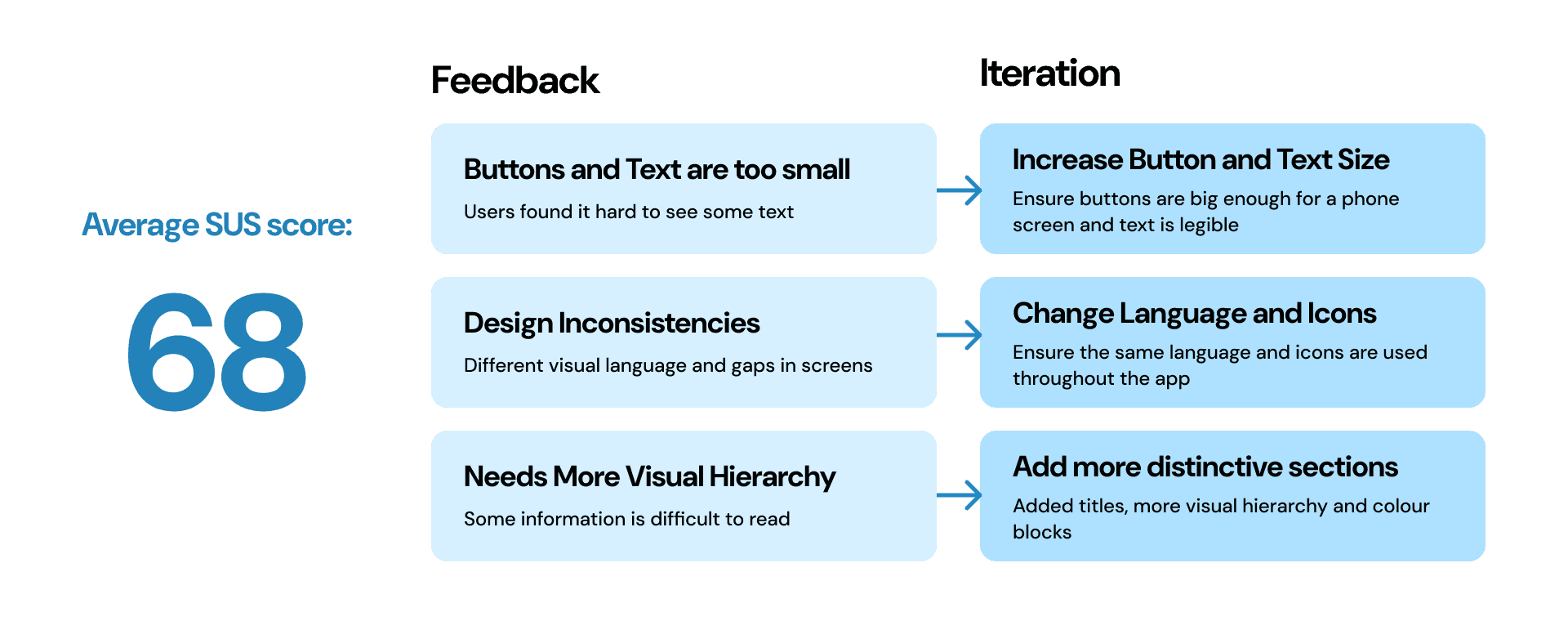
Based on user testing, the below visual highlights the key issues with our design, and how we refined it in response to feedback.
Final Solution
Product Demo
Widget
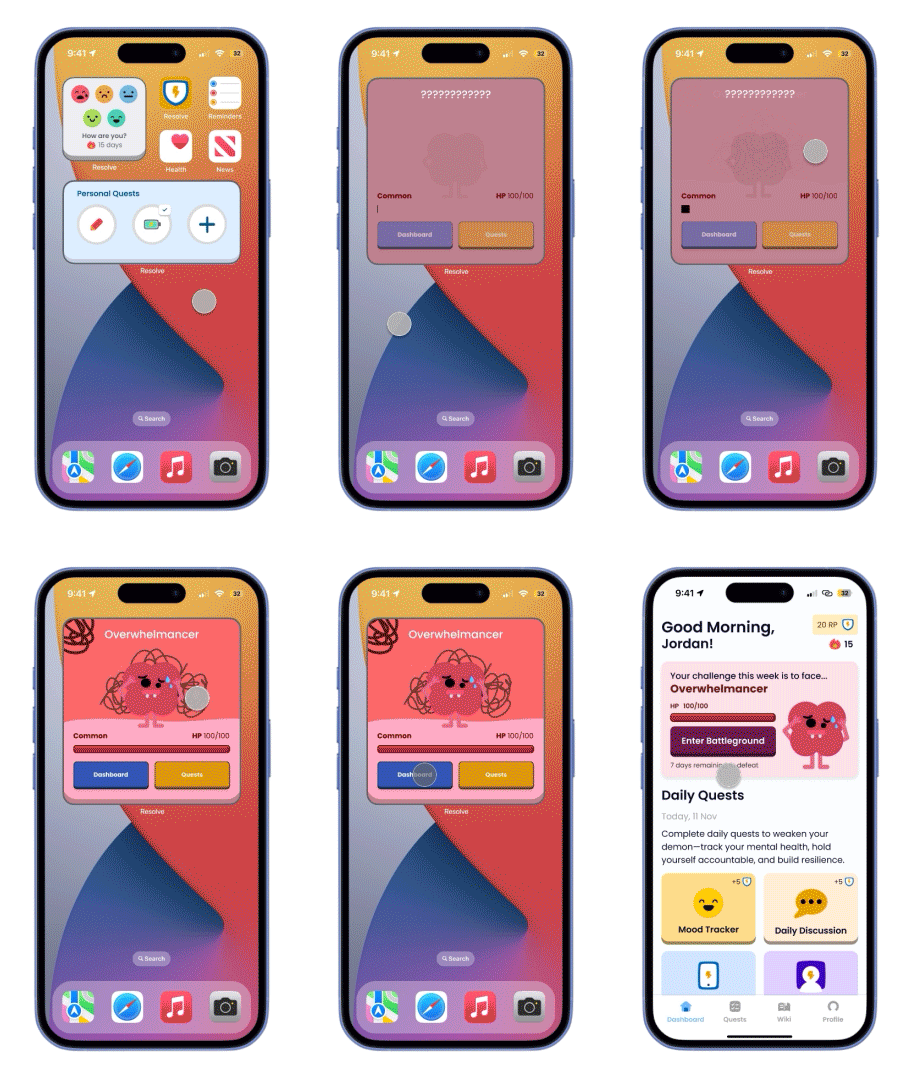
Introducing this week's demon
Each week, users face a unique demon tailored to their previous mood tracker responses, representing their current challenges. Every demon comes with personalised strategies and tasks to help users overcome it.
We chose to incorporate widgets as they allow users to quickly glance at key information without needing to open the app. This allows users to preview their weekly demon and stay engaged with their mental health journey in a seamless way, encouraging regular check-ins throughout the week.
Mood tracker
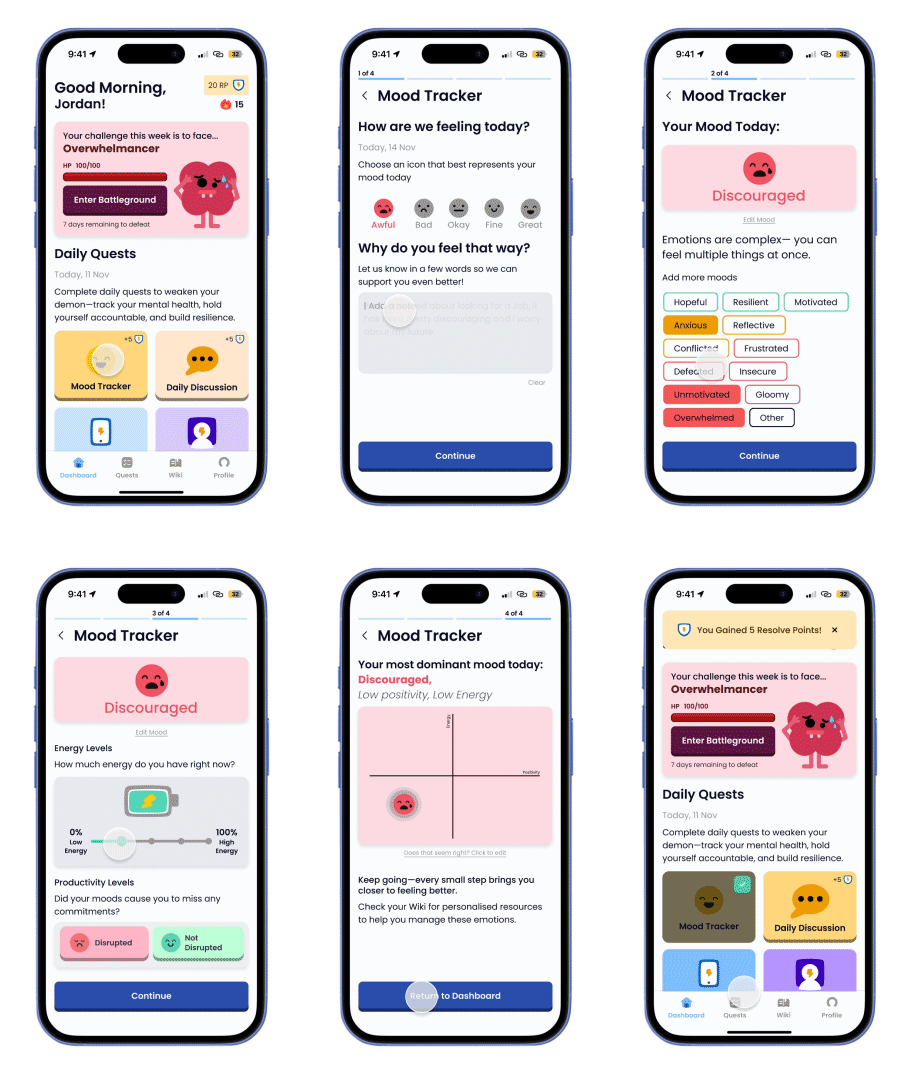
Track your daily mood
Mood tracking and journaling reveals behaviour patterns over time, enabling early intervention for mental health issues. This ongoing self-reflection not only supports user awareness and growth, but also generates data for the Wiki, providing personalised resources and strategies tailored to each user's unique experiences and needs.
Points system
Users earn RP (Resolve Points) by completing tasks, which will be used to defeat their demons, turning their actions into meaningful progress.
Wiki
Resources
Personalised resources are generated based on users' mood tracker responses and journals, ensuring content is relevant to their current needs. These resources include articles, videos, and podcasts.
After engaging with a resource, users can evaluate it, allowing the system to continuously refine and improve future recommendations.


Wiki
Demon wiki
Users can also explore detailed information about the demon they're facing that week, including its common effects and strategies for overcoming them. This empowers users with insight and practical guidance tailored to their current challenges.
Quests
Daily Discussions
Users can also earn RP by completing quests, such as participating in daily discussions.
These community-building prompts encourage anonymous sharing, allowing users to express their thoughts, respond to others, and connect through shared experiences — fostering a sense of support and belonging.


Quests
Personal Quests
Personal Quests encourage users to prioritise their physical well-being alongside mental health. Users can add personal quests from the list of recommended activities, or create their own custom quests, allowing for a more tailored and motivating experience.
Battleground
Defeating the Demon
At the end of the week, users enter the battleground to confront their demon, using RP gained throughout the week to launch attacks. This final challenge turns progress into a rewarding, gamified experience that reinforces their efforts throughout the week.


Profile
Achievements
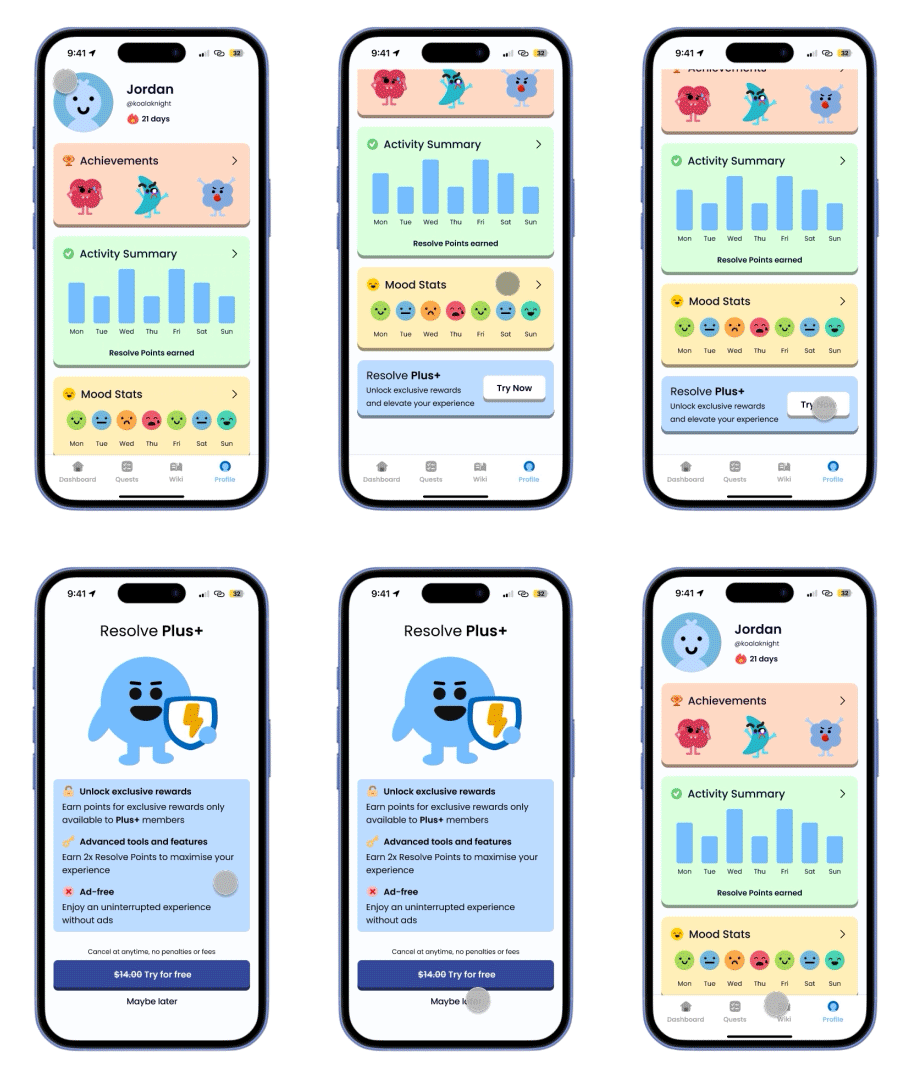
Users can track all defeated demons and earned badges, providing a sense of accomplishment and motivating them to unlock more.
Activity Summary
Users can review their weekly and monthly activity to reflect on their habits and overall progress.
Mood Stats
Users can view their mood trends over the course of a month, helping them recognise patterns and better understand their emotional journey.
Profile
Resolve Plus+
To support the app’s long-term viability and continued development, we introduced a subscription model.
Plus+ members gain access to exclusive perks, including earning points for towards rewards like DoorDash and UberEats vouchers, receiving 2x points, and enjoying an ad-free experience.
This enhances user engagement and satisfaction but also ensures financial sustainability for future updates and improvements.
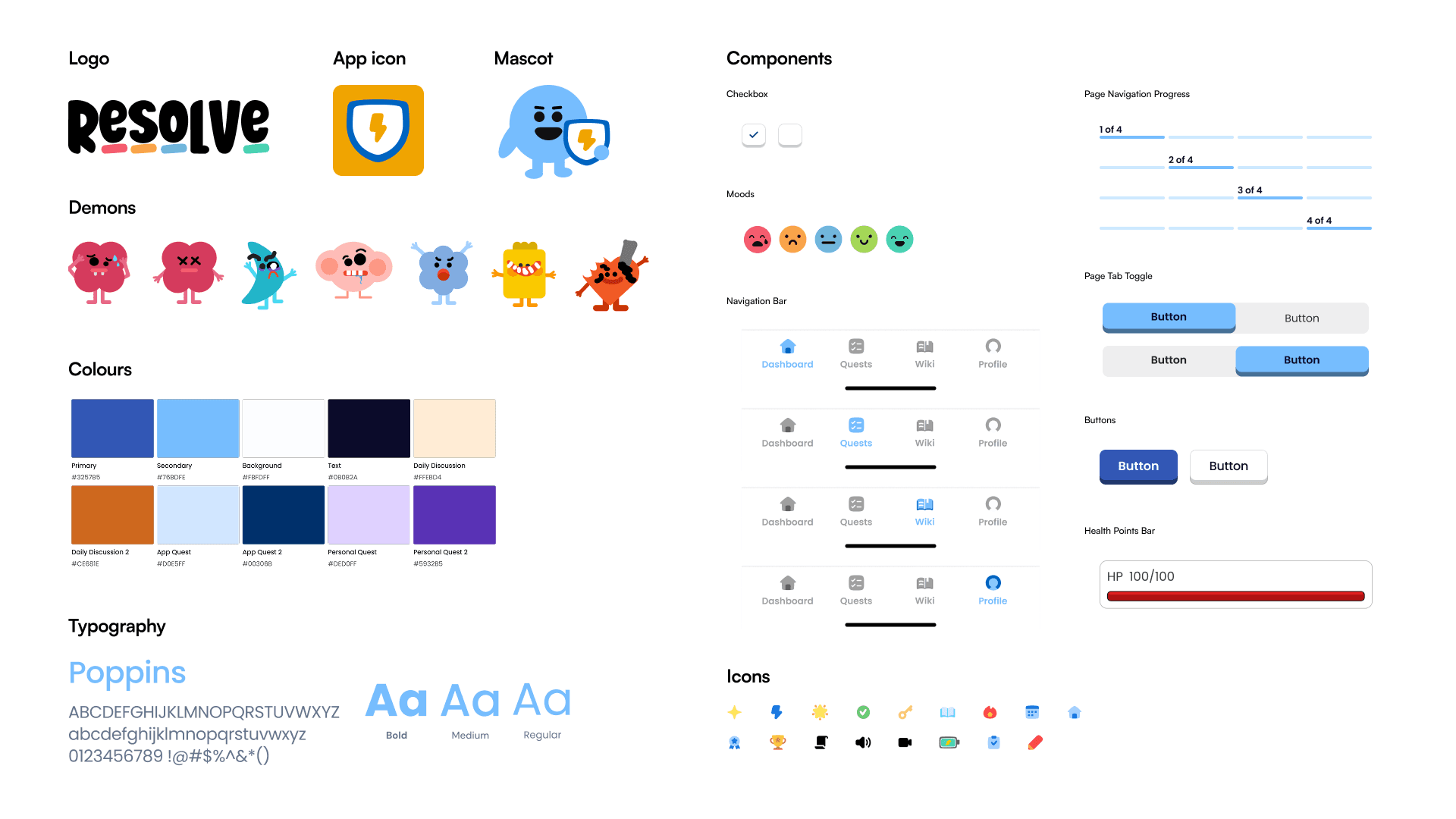
Design System
Learnings & Takeaways
That it's important to gather actionable insights to help guide future design decisions. While some findings may be significant, it may be too much of a complex problem to solve (such as changing social and cultural norms), so we should focus on those that are more tangible for us as designers.
Ensuring our idea is feasible and within project constraints. Some of our ideas required a lot more technical expertise and time, so we had to adapt and pivot when needed.
Learnt a lot more about Figma, especially with smart animate and how important components really are when we are constantly iterating and refining our designs